Product Ecosystem Expansion

Ingredient Kit Launch & Product Ecosystem Expansion System

Turning ingredient kits from isolated SKU launches into a structured growth system built around product roles, scenario-led page design, and coordinated repurchase / accessory expansion.

System upgrade focus

In iGulu's business model, ingredient kits are not just consumables. They are the core module connecting machine usage frequency, product education, repeat purchase, and long-term customer value. This system upgrade restructured the old one-template SKU launch model into a clearer conversion system.

01

Product Role System

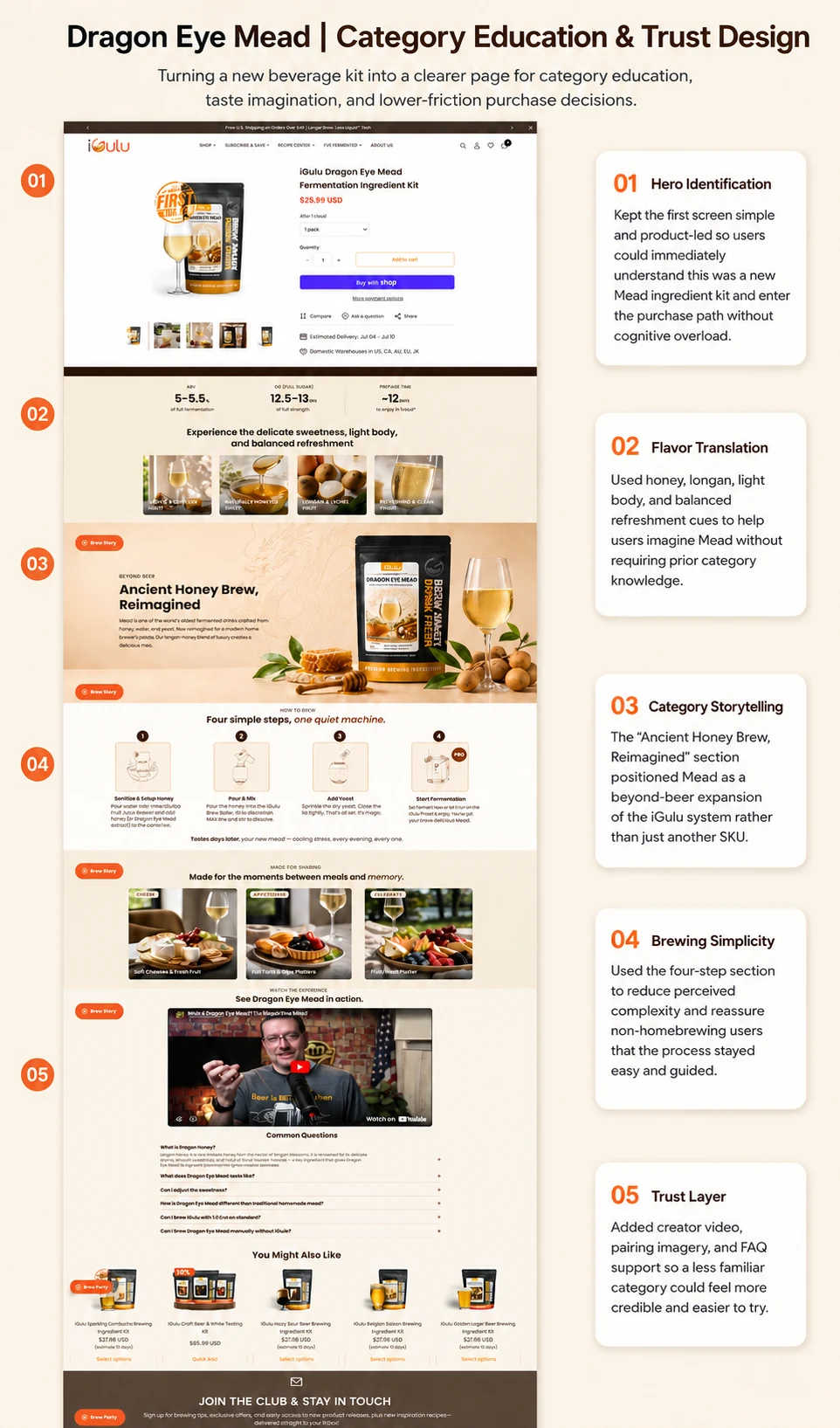
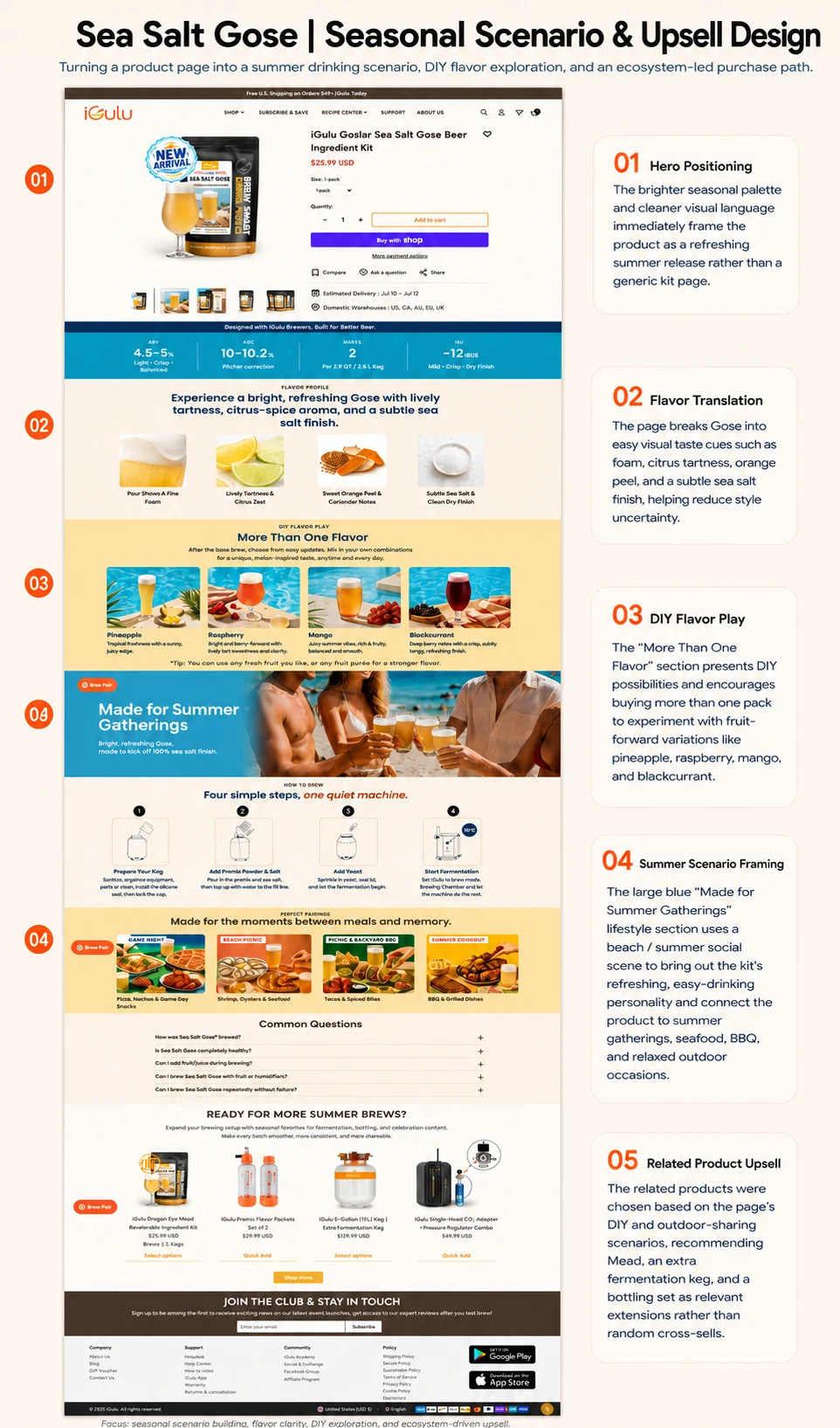
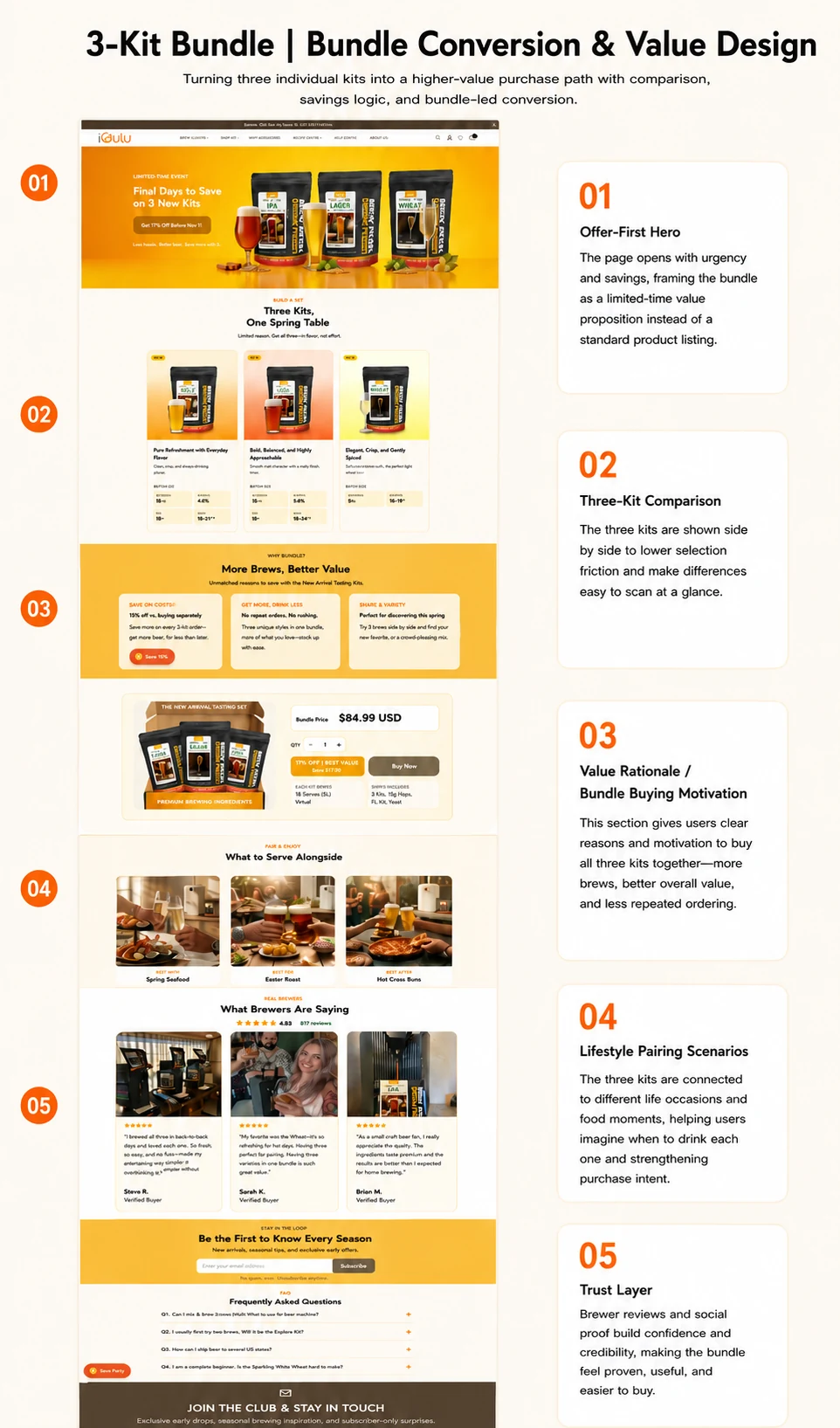
Each kit was redefined by business role rather than released through a single universal product-page template. The page strategy changed depending on whether the kit served category education, scenario creation, or bundle-led repeat purchase.
02

Scenario-led Design

The page structure shifted from simply describing the product to helping users imagine when to use it, why it fits a specific moment, and how taste, pairing, or seasonality shape the purchase decision.

03

Ecosystem Expansion

Bundles, accessories, and related products were no longer treated as random add-ons. They were reorganized into a more natural product ecosystem that extended single-SKU purchase into multi-product value paths.

Core Strategy

From SKU launch to growth system

In the original structure, all ingredient kits were launched through the same product template. As a result, different products lacked clear positioning, users could not quickly understand why they should buy different kits, scenario cues were weak, accessories and bundles existed but did not form a meaningful system relationship, and the page functioned more like information display than conversion design.

What the upgrade needed to solve

  • Clarify the product role of each kit instead of keeping all SKUs structurally identical.
  • Build page structures around real usage scenarios rather than only product facts.
  • Extend single-product consideration into bundle, accessory, and ecosystem-level purchase paths.
  • Turn the page from “what the product is” into “when to use it, why to choose it, and what to buy with it.”

Design Logic

Decision path redesign

The goal was not just to refresh visuals, but to rebuild the decision path around product role. By redefining each kit as either category education, scenario-led demand, or bundle / repeat-purchase driven, the page logic could change accordingly. This moved the experience from a flat SKU page into a structured conversion system.

How the page structure evolved

The overall page shifted from “what the product is” toward “when the user would use it, why it is worth choosing, and how it can be bought together with other products.” Bundle modules, accessory recommendations, and cart-level upsell became part of a larger purchase architecture rather than isolated merchandising blocks.

Results & Takeaways

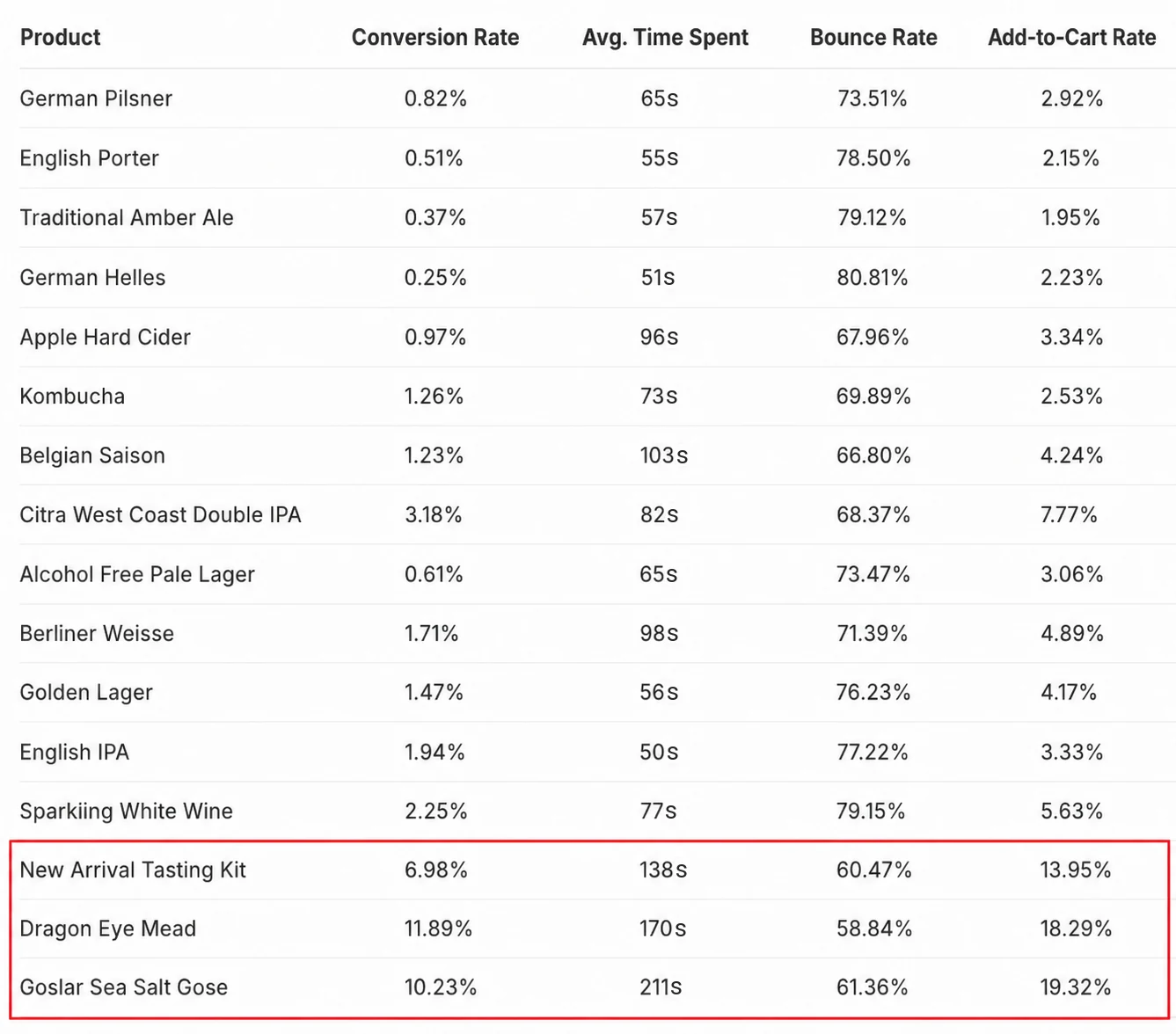
After restructuring product-page information and ecosystem relationships, user behavior improved significantly compared with the old template pages, whose average conversion rates were roughly in the 0.25%–1.26% range. The new pages for Mead, Sea Salt Gose, and the New Arrival Tasting Kit all showed much stronger conversion and add-to-cart intent.

3×–10×Conversion uplift versus the old template-page baseline.
Higher A2CAdd-to-cart rate increased alongside clearer product roles and ecosystem extension.
Longer timeUsers stayed longer on the page when scenario cues and structured decision support were added.
System insightConversion came from role clarity + scenario framing + ecosystem design, not visual polish alone.

What the data validated

The stronger performance of the redesigned pages validates a key conclusion: conversion does not improve because a page simply looks better. It improves when users can understand the product role, imagine a relevant use scenario, and see a natural extension into accessories, bundles, or repeat purchase.

What this system made possible

Single SKUs were no longer treated as isolated releases. Instead, they became coordinated parts of a broader product ecosystem—one that supports category education, seasonal demand creation, higher-value purchases, and stronger long-term kit consumption within the iGulu machine system.

Previous System Lifecycle System Next System Content & Community System