AI-Assisted PR & Media Acquisition Workflow
Increase processing capacity without lowering media relevance
The bottleneck was not simply writing emails. Each target still required evidence-based qualification, usable contact research, a credible product angle, and quality control before outreach.
AI accelerated repetitive research, classification, drafting, and scoring. Targeting standards and final approval remained human-controlled.
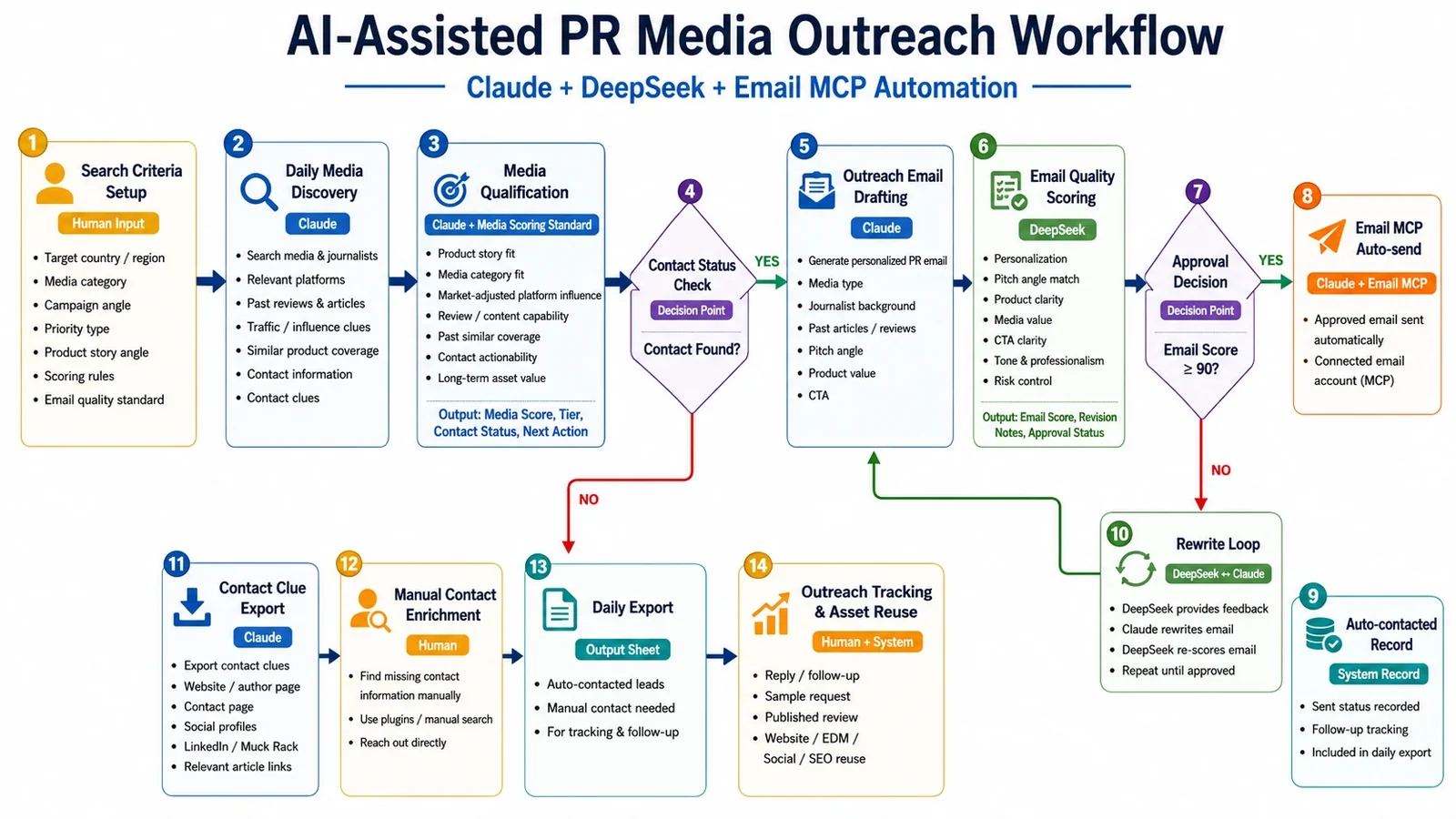
Turn a manually validated PR process into a connected operating system
The original workflow visual shows how discovery, qualification, contact research, drafting, email scoring, approval, sending, and tracking connect within one system.
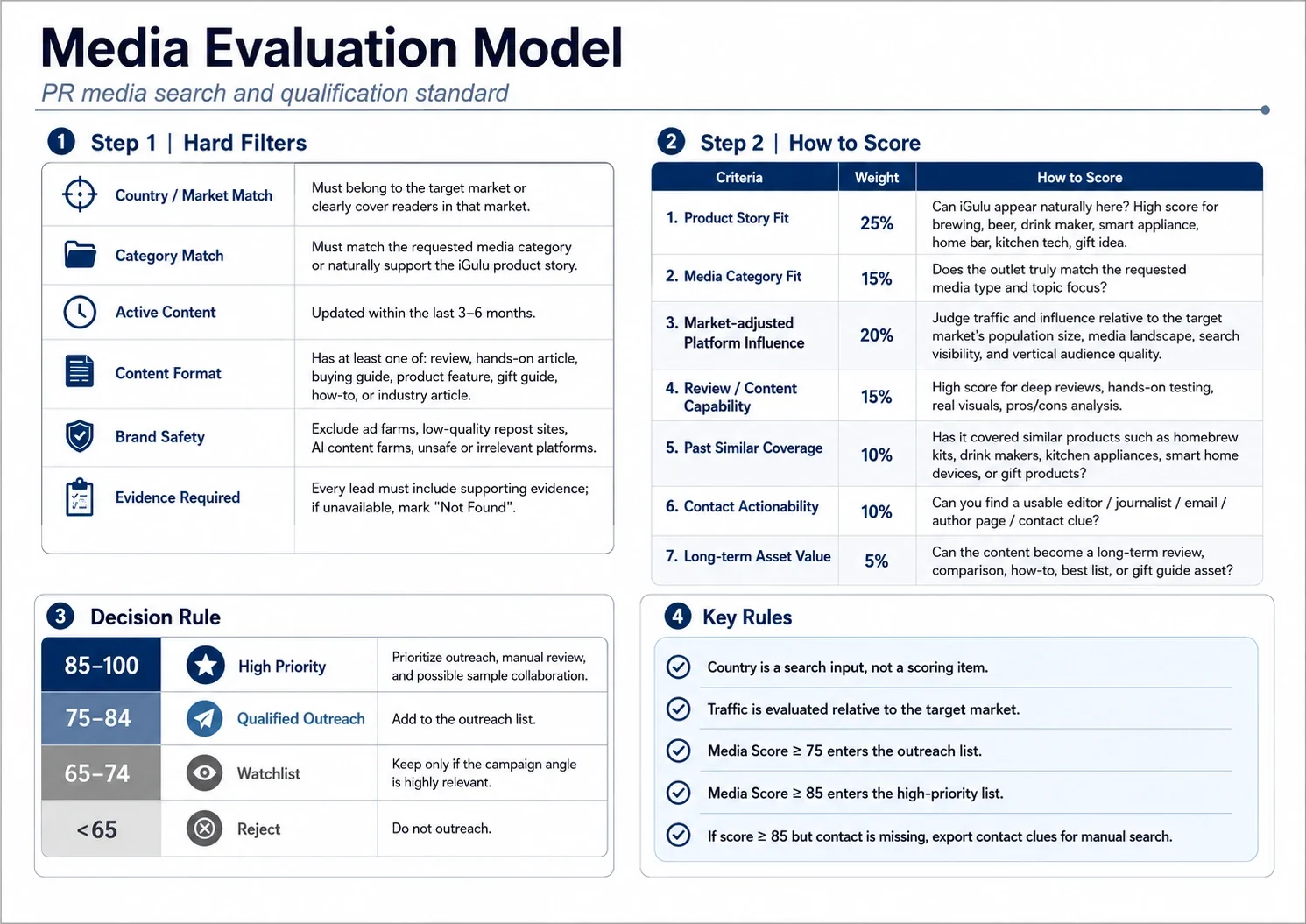
Define both who enters the outreach queue and what is ready to send
Target qualification and email approval were handled through separate standards rather than treating every discovered outlet or generated draft as send-ready.
Connect structured output with real replies and published coverage
The media queue, positive response, and coverage examples are presented together as evidence of how the system moved from qualification to external outcomes.
Media value was not defined by reach alone. Different outlets qualified for different reasons: broader publications supported visibility and third-party credibility, while relevant review outlets supported deeper product testing and repeat coverage.
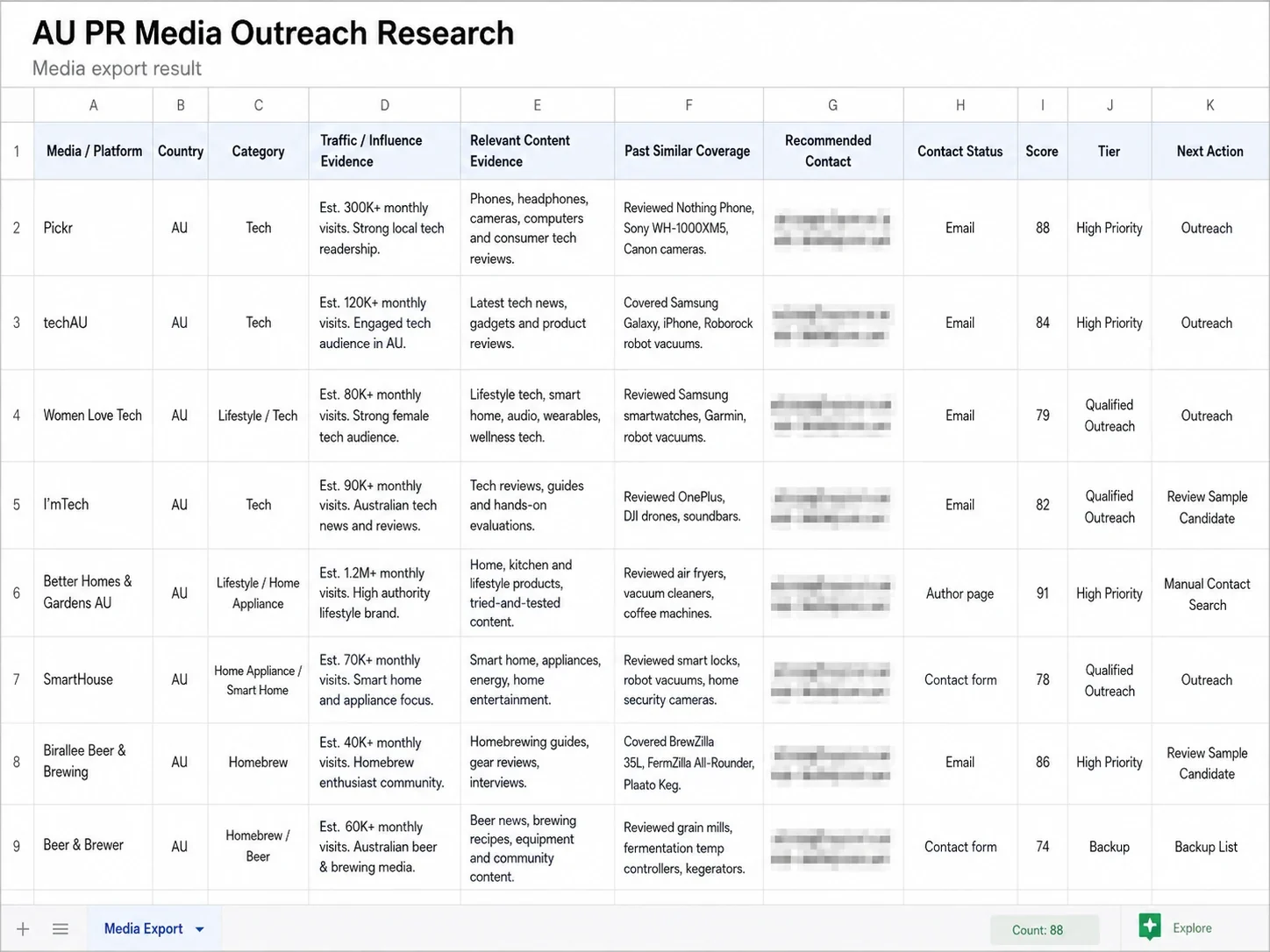
Actionable Media Queue
The workflow converted research into a structured output containing relevance evidence, contact status, qualification score, priority tier, recommended pitch direction, and next action.
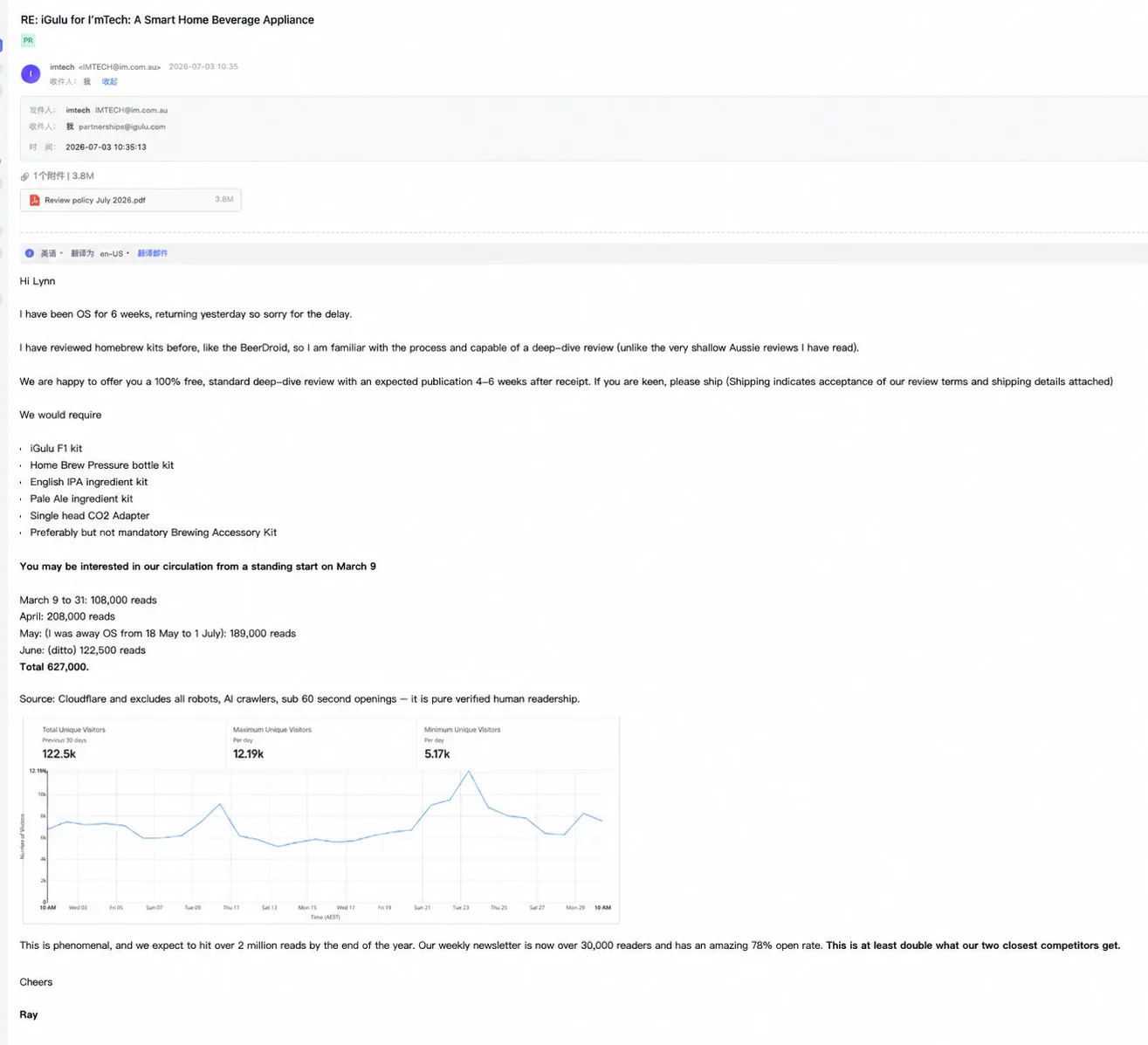
Selected Positive Response
A representative reply showing that qualified outreach progressed into a real media opportunity. The example is used as outcome evidence rather than as proof of every outreach result.
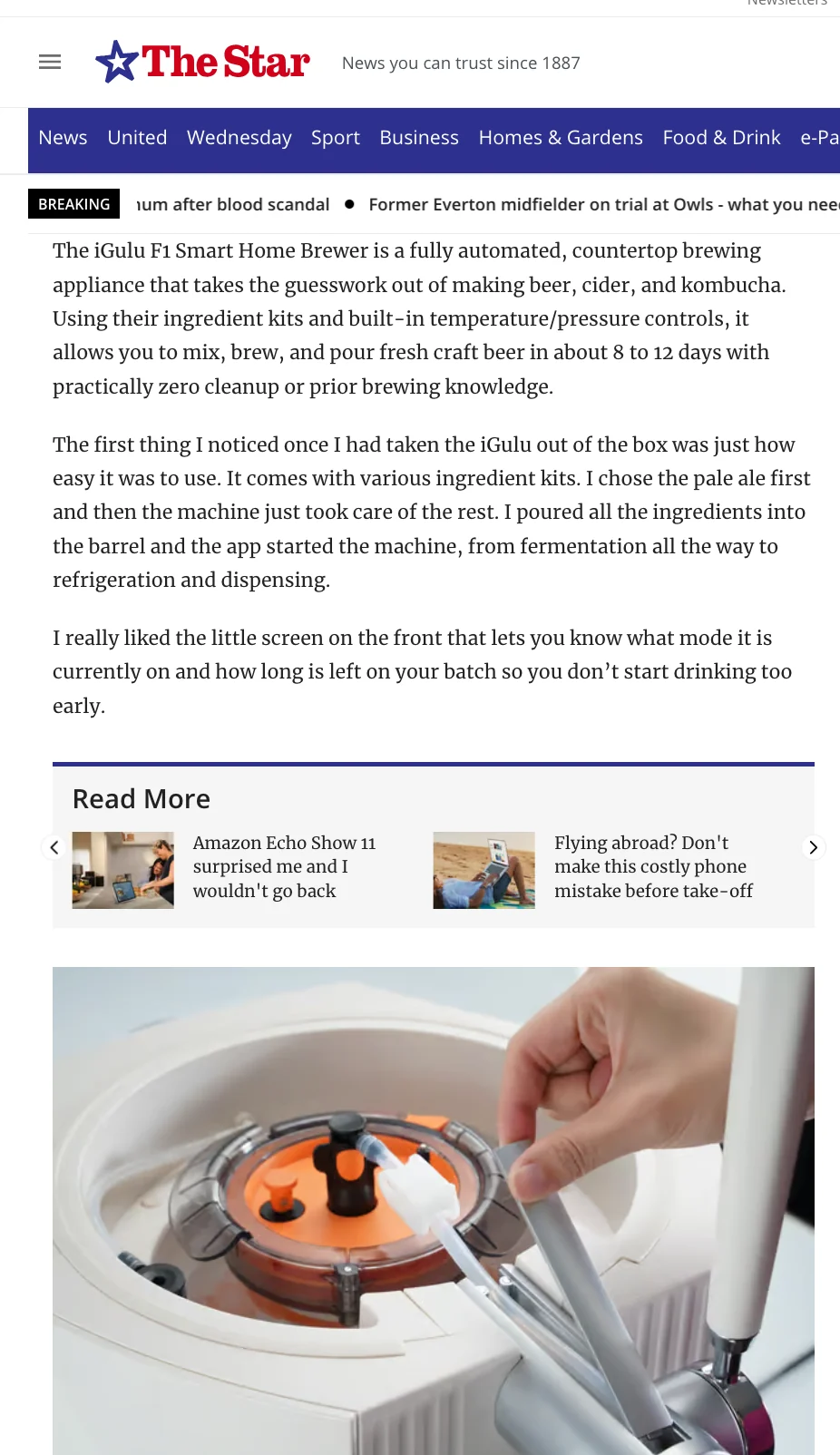
High-Reach National Publication
Selected for broad consumer visibility and relevant lifestyle and product-review coverage. This type of outlet supported wider brand reach and third-party credibility beyond the core home-brewing audience.
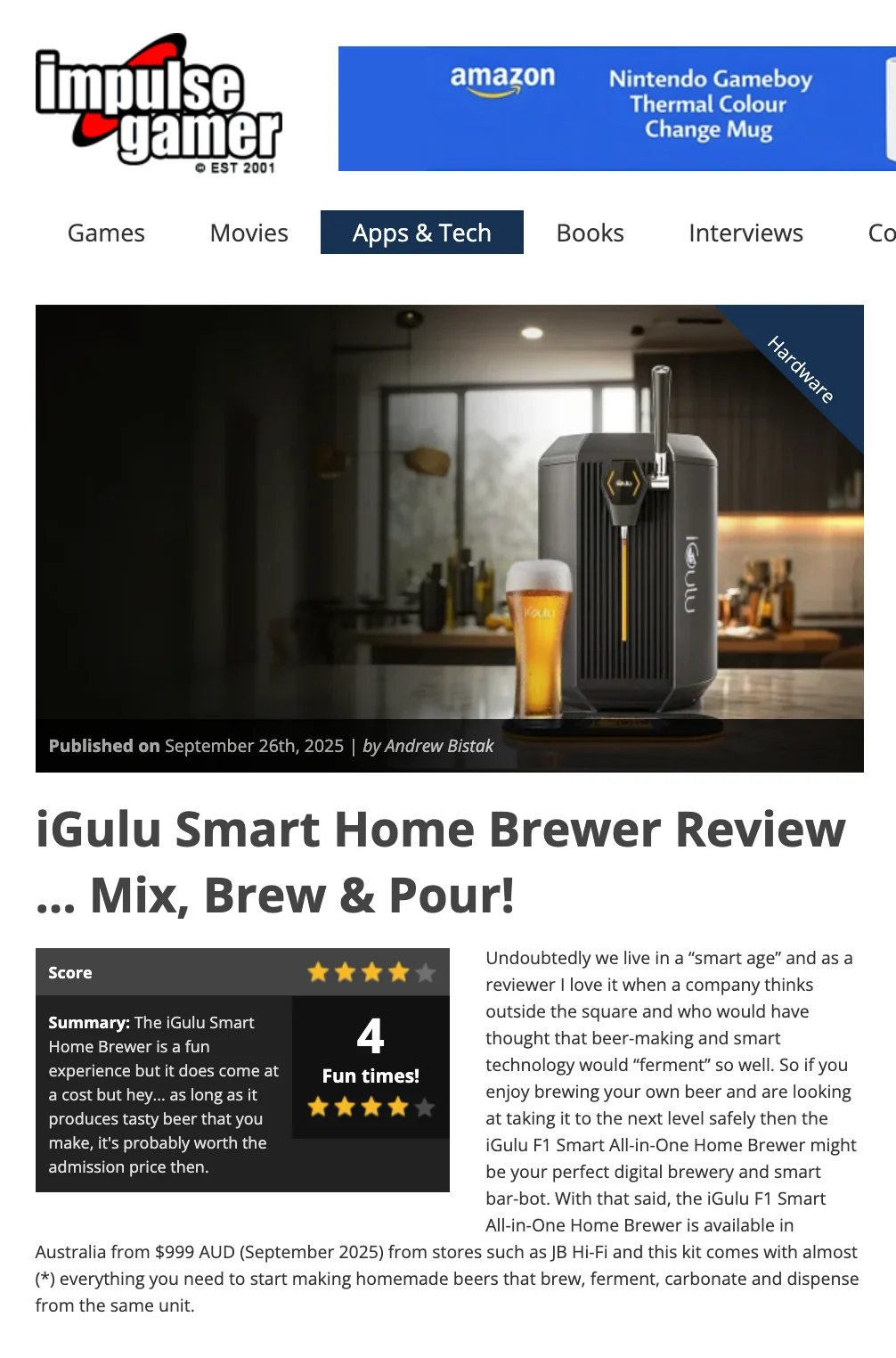
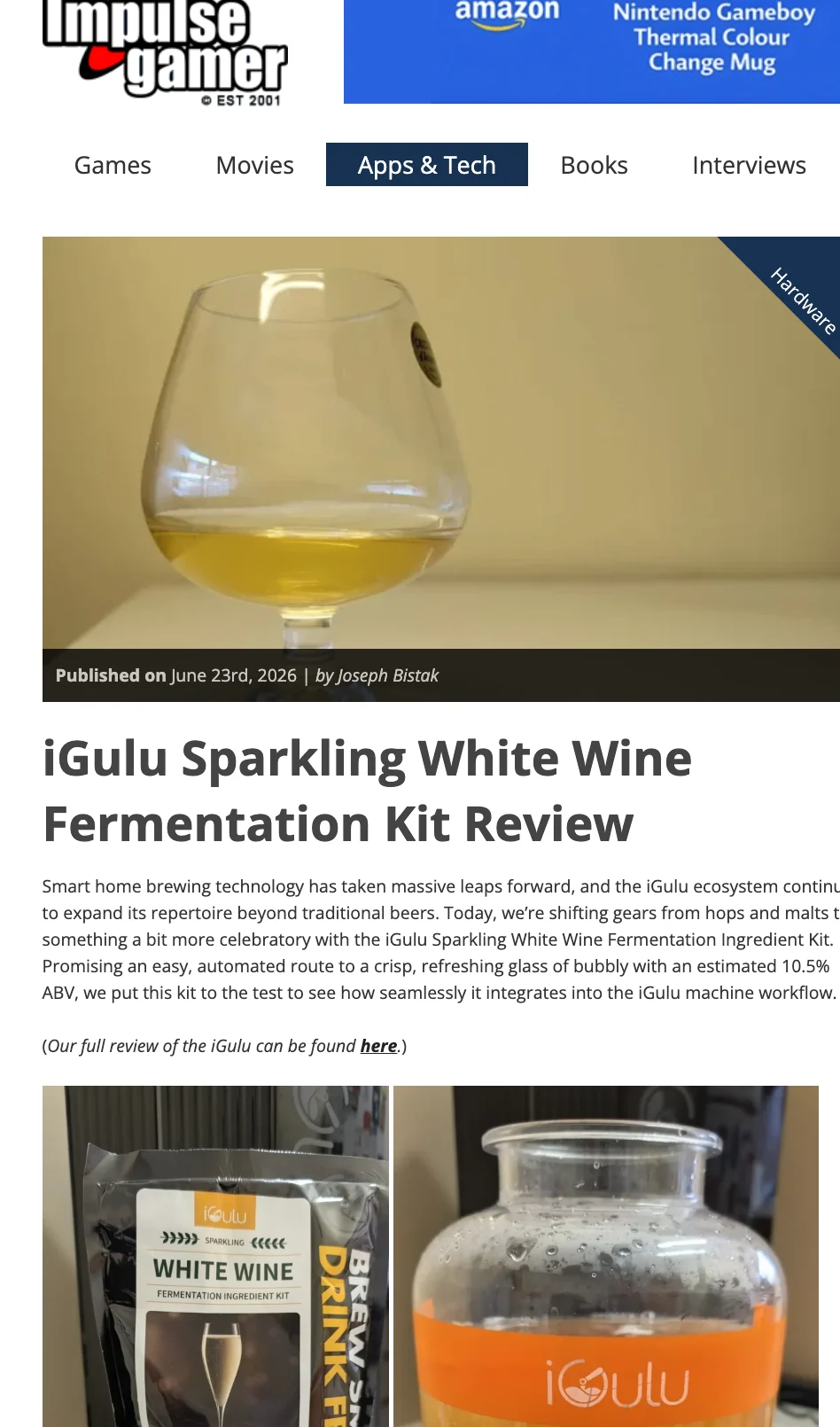
Relevant Review Outlet with Repeat Coverage
Selected for strong technology and hardware review fit, detailed product-testing format, and continued coverage potential. The brewer review was followed by a second review focused on a new ingredient kit.
What This Workflow Established
The project established a reusable PR acquisition system that converted media qualification, pitch matching, quality review, and tracking into structured operating rules. AI increased processing capacity and reduced repetitive handling, while human control remained responsible for targeting standards, final approval, strategic exceptions, and active media relationships.